Say when sampling adds something and when temperature checks are the control
Describe how a sample is taken so the result means something
Read a laboratory report and know what to do with it
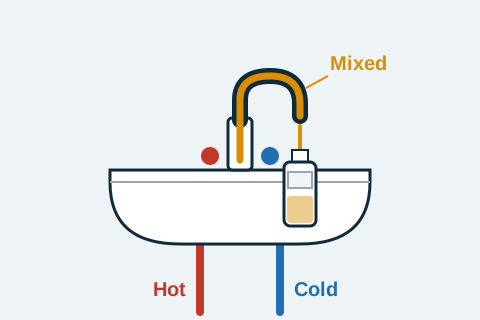
A sample from a mixer tap. Whose water is it?
This sample was taken from a mixer tap in a staff kitchen. What is wrong with that?
What an assessor sees
A mixer blends hot and cold, so the result tells you about the few centimetres after the valve, not about either system. The HSE says to sample separate hot and cold outlets, never through a mixer or anything downstream of a mixing valve or shower.
When to sample
For most hot and cold water systems, temperature is the control and the monthly checks are the proof. Sampling is not routine. It earns its place when the temperatures cannot be held, when a control has failed, where people at high risk use the water, after a positive result or a case, and in healthcare, where sampling programmes are usual.
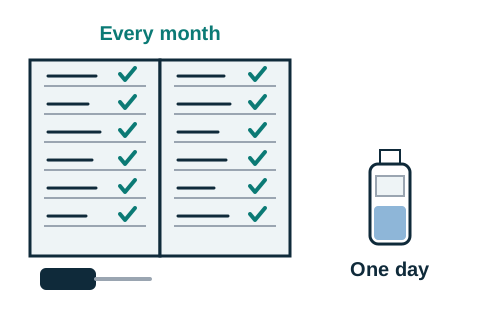
A sample tells you about one outlet on one day. A run of good temperature readings tells you about the whole system all year. That is why the log book comes first and the lab second.
A year of readings, and one bottle.
Taking a sample properly
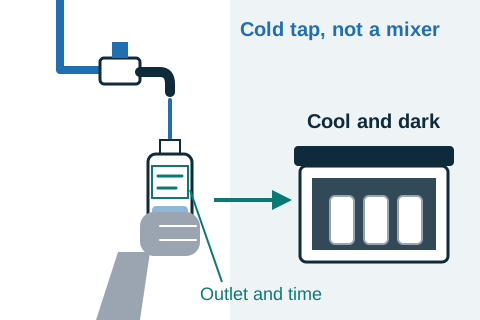
Sampling follows BS 7592, the British Standard code of practice. Separate hot and cold outlets, not mixers. A sterile bottle with a neutraliser for any disinfectant in the water. The outlet and the time on the label before it leaves the room. Cool, in the dark, to the lab within a day.
The laboratory must be UKAS-accredited (checked by UKAS, the UK's national body that checks laboratories) for the legionella method. A result from anywhere else is not evidence. Ask to see the accreditation number on the report.
The right tap, a label, and a cool box.
Quick question
Sampling and the laboratory, in the HSE's words
The HSE’s words · 1 of 3
Where legionella sampling is called for in a hot and cold water system, it follows the British Standard BS 7592, the code of practice for sampling.
Samples are taken from separate hot and cold outlets, not through mixer taps or anything downstream of a mixing valve or shower, and each bottle is labelled with where it came from.
Legionella samples are analysed by a UKAS-accredited laboratory whose UKAS accreditation covers the ISO method for legionella.
Reading the report
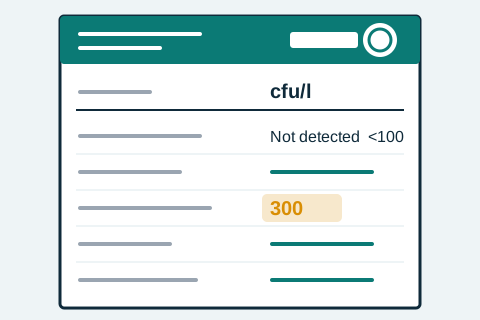
The certificate lists each sample, its outlet, the method, and the count in cfu/l: colony-forming units per litre. 'Not detected' is reported against the lab's detection limit, printed beside it, so 'not detected' means fewer than that, not none.
It may name the species: Legionella pneumophila serogroup 1 causes most disease, so a count of that weighs more than the same count of another species. Then the action levels from module 8: over 100 and up to 1,000, and over 1,000. Healthcare acts on any detection.
The lab's number, the outlets, the counts.
Quick question
In your building
For something else, or i just want to understand it.
Before you order samples, ask what question they will answer that the temperature log does not. If there is one, agree the outlets with your assessor, use a UKAS lab, and file the certificate with the log.
This week: find the last sample results, if any, and the lab's accreditation number.
In short
Temperature checks are the control; sampling is for when they cannot be held, a control fails, people are at high risk, or something has gone wrong.
Samples follow BS 7592: separate hot and cold outlets, never a mixer, labelled with the outlet, to a UKAS-accredited lab.
Read the report in cfu/l, note the species, and act on the bands: over 100 and up to 1,000, over 1,000; any detection in healthcare.
Before you go · question 1 of 3 · not marked
Module B done
That is this extra done; it is named on your certificate. The course page has the others.