Schools, nurseries and children's homes
Module D, optional · about 6 minutes
Module D · sScreen 1 of 12 · about 6 minutes
In this module
By the end you will be able to:
- Plan the water round the school year, not the calendar year
- Name the outlets that go quiet and what is done about them
- Say who carries the duty in a school, a nursery and a children's home
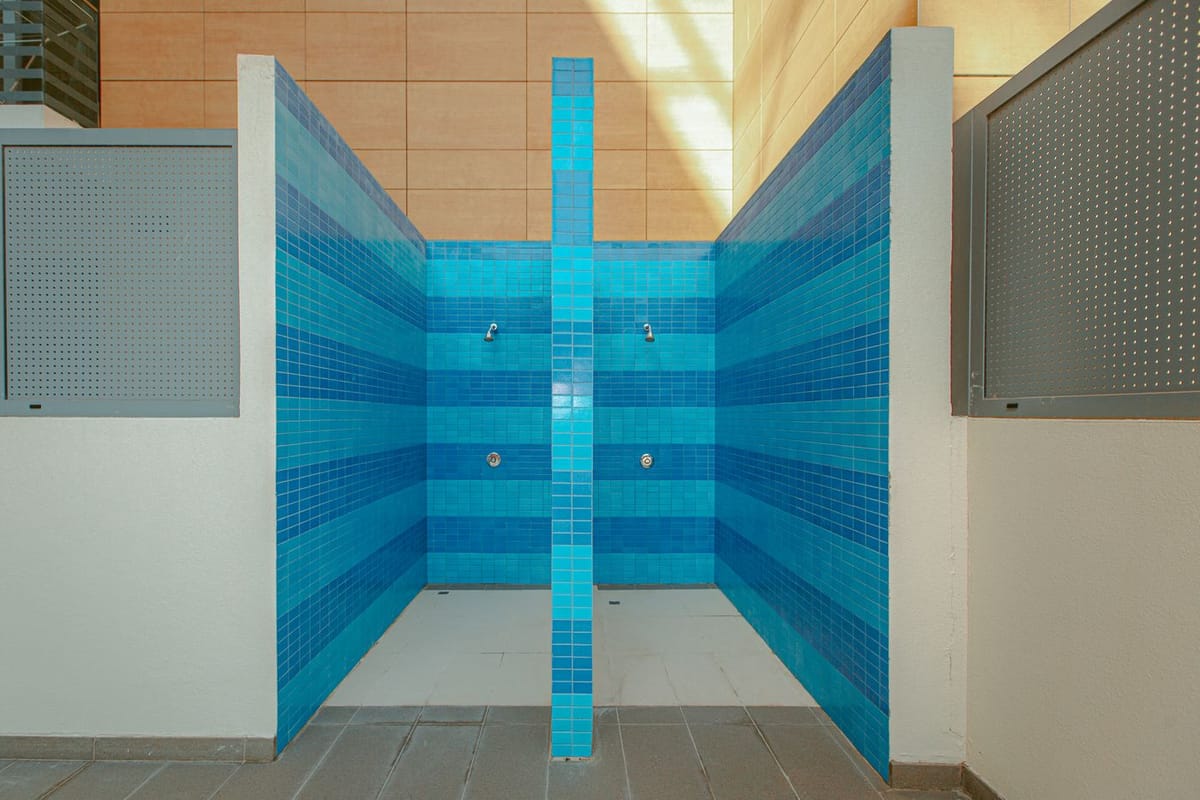
These showers were last used in July. It is the last week of August. What has been happening in them?
What an assessor sees
Water has stood in the shower heads and the pipe feeding them for seven warm weeks, in a block with the heating off. On the first morning of term, the first child to run one breathes in whatever grew. The holiday flush, and a clean of the heads before term, is what stops that.
The school year, not the calendar
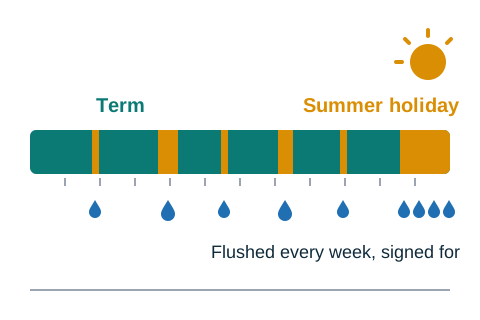
A school's water has two lives. In term, most outlets run daily and the routine is the ordinary one: monthly sentinels, quarterly shower heads. In the holidays the whole building becomes a set of little-used outlets, in the warmest weeks of the year.
So the written scheme says who flushes every outlet weekly through each holiday and signs for it, and the last week before term is the flush, the temperature round, the tank look and the shower heads. The caretaker's house and the sports pavilion are in the plan too.
The outlets that go quiet, and the children
Beyond the holidays: the PE showers used one term a year, the science prep-room sinks, the music block toilet, a classroom basin behind a locked door, a drama studio shower, electric showers set to warm in a staff room. Each is flushed weekly or taken out.
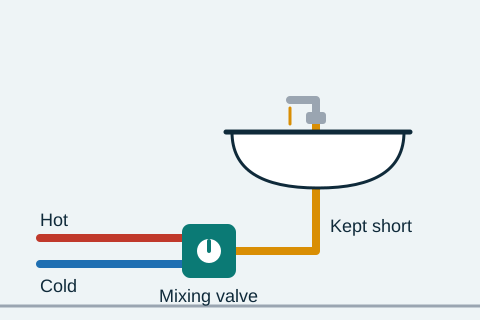
Young children scald at temperatures adults tolerate, so basins and showers they use have mixing valves, and the lukewarm stretch after each one is short and flushed. A children's home is a residential setting, so extra C sits alongside this one. In a nursery, the scalding rules for the very young matter most.
Quick question
The rules a school leans on most, in the HSE's words
The HSE’s words · 1 of 4
An outlet not in regular use is flushed weekly, for several minutes, and the flush is logged; once started it must not lapse.
Small heaters and electric showers have spray nozzles that are inspected, cleaned and descaled with the shower heads; left unused, or set to warm, their risk rises sharply.
Water above 44 °C at an outlet can scald, and the danger is greatest where vulnerable people, the very young and the elderly among them, bathe or shower.
If you are an employer, or you control premises, you are responsible for the legionella risk there.
Who carries the duty
The duty holder is whoever controls the premises: in England, the local authority for community, voluntary controlled and maintained nursery schools, the governing body for voluntary aided and foundation schools, an academy trust for its academies, the proprietor of an independent school, the registered provider of a nursery or a children's home. The head or site manager is usually the responsible person.
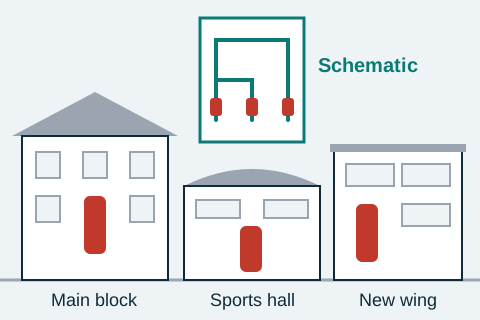
Several buildings added over decades often mean several hot water systems and no single drawing. The assessment's schematic is the first thing a new site manager should ask for, and the first thing an assessor draws if there is none.
Quick question
In your building
For something else, or i just want to understand it.
If your building has long quiet spells, write them into the scheme as a school writes its holidays: who flushes weekly, who signs, and what is done in the last week before people return.
This week: list your building's quiet spells and what is done about the water in each.
In short
- A school's water lives by the school year: weekly flushing through every holiday, signed for, and a full round in the last week before term.
- PE showers, prep-room sinks, locked basins and warm electric showers are flushed weekly or removed; children's outlets have mixing valves.
- The duty sits with whoever controls the premises: council, trust, proprietor or provider; the site manager is usually the responsible person, and the schematic is the first document to find.
Before you go · question 1 of 3 · not marked
Module D done
That is this extra done; it is named on your certificate. The course page has the others.
Save and carry on later: this browser remembers where you are.
Sources
Words last checked 19 October 2026. Spotted a mistake? Tell us. Course version 2026.10.