Records, results and when things go wrong
Module 8 of 8 · about 8 minutes
Module 8 of 8 · sScreen 1 of 12 · about 8 minutes
In this module
By the end you will be able to:
- Say what must be kept on record, and for how long
- Read a laboratory result and know which action level it falls in
- Know what happens after a positive result, a case of illness, or a long shutdown
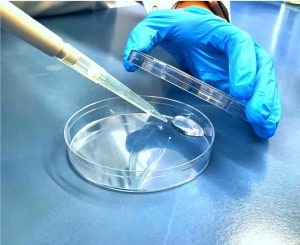
The lab reports 1,200 cfu/l at one shower. What happens now?
What an assessor sees
Above 1,000 cfu/l the HSE's table says: sample again, review the controls and the risk assessment at once, disinfect the system if needed, then retest a few days after disinfecting and keep retesting until the counts show the system is back under control. Your assessor will usually advise taking that shower out of use until the retests are clear.
What to keep, and how long
Keep a record of who is responsible, the significant findings of the assessment, the written scheme and how it is carried out, whether each system is in use, and the results and dates of every check. With five or more employees the findings must be written down; with fewer it is still the way to show what was done.
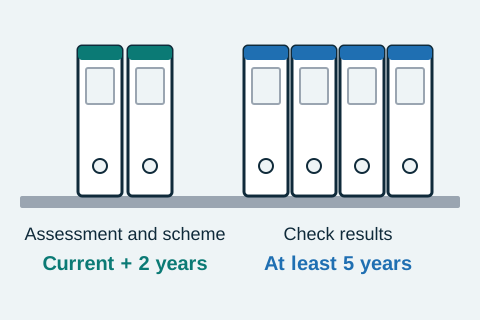
The assessment and the scheme are kept for as long as they are current and at least two years after. The results of checks are kept for at least five years. Paper or electronic, what matters is that the next person can find them.
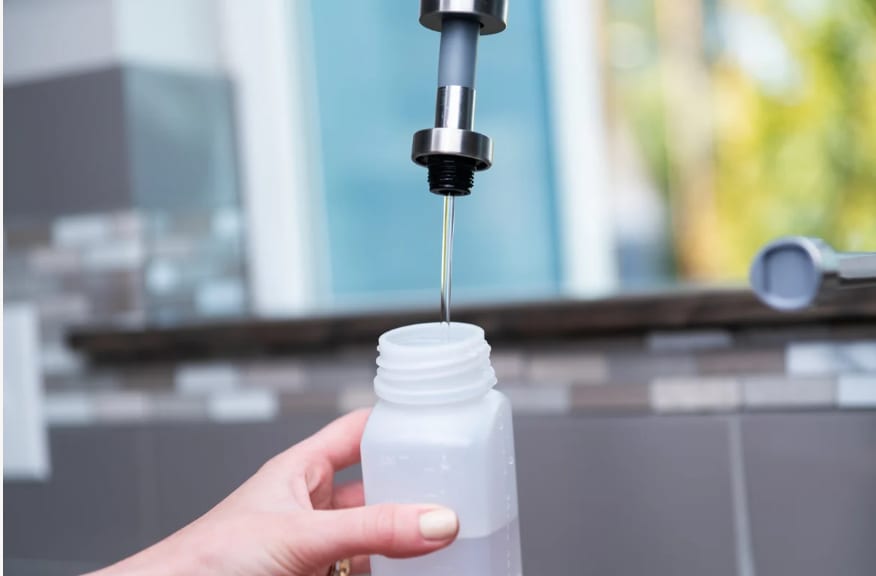
Reading a sampling result
Most hot and cold water systems are not sampled routinely; temperature checks are the control. When samples are taken, the result comes back in cfu/l, colony-forming units per litre. HSG274 gives two action levels: over 100 and up to 1,000, and over 1,000.
In the lower band, what matters is the pattern: a few positives mean sample again and review if it repeats; most positives mean the bacteria may have settled in and be growing in the pipes, so review at once and consider disinfection. Above 1,000, act at once. Healthcare has its own stricter table.
Quick question
The action levels and the reporting duty, in the HSE's words
The HSE’s words · 1 of 4
Between 100 and 1,000 cfu/l: if only a few samples are positive, sample again and review if it repeats; if most are positive, the system may be colonised, so review the controls and the assessment at once and consider disinfecting.
Above 1,000 cfu/l: sample again, review the controls and the assessment at once, disinfect if needed, then retest a few days after disinfection and keep retesting until the system is back under control.
A case of legionellosis in an employee who has worked on a cooling tower or a water system likely to be contaminated must be reported under RIDDOR.
Keep the assessment and the scheme for as long as they are current and at least two years after. Keep the results of checks for at least five years.
A case of illness, and a building reopened
A case of Legionnaires' disease is a notifiable illness. Public health officers and the local authority or the HSE may investigate buildings the person used, and the first thing they ask for is your records. A case linked to your system is a reason to review the assessment at once, and a case in an employee who worked on the system is reported under RIDDOR.
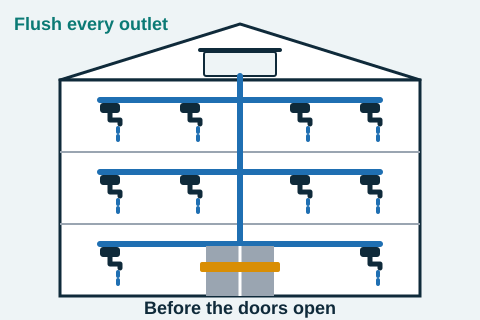
A building that has stood empty for weeks has water that stood with it. The weekly flush carries on while it stands empty; unflushed for even two or three weeks, it may need disinfecting. Before people return, flush every outlet, check the sentinel temperatures, inspect the tank, and ask the responsible person whether the system should be disinfected. Do it before the doors open, not after.
Quick question
In your building
For something else, or i just want to understand it.
Know where your records are and that they cover the five years. If a result or a case ever arrives, you will work through it with your assessor; the table in this module is what they will be following.
This week: find the oldest temperature record you hold, and check it goes back five years or to when the system started.
In short
- Keep who is responsible, the significant findings, the scheme, whether each system is in use, and every check's result and date: two years after they are current for the documents, five years for the checks.
- Over 100 and up to 1,000 cfu/l: a few positives, resample and review if it repeats; most positive, review at once and consider disinfection. Over 1,000: resample, review at once, disinfect if needed, retest until under control.
- A case means an investigation and your records; a RIDDOR report for an employee who worked on the system; a review of the assessment. A building that stood empty is flushed and checked before people return.
Before you go · question 1 of 3 · not marked
Module 8 of 8 done
That is the last of the eight. The final test is open to you from the course page once you have signed in.
Save and carry on later: this browser remembers where you are.
Sources
- HSE: Monitoring and keeping records
- HSE: Duties under other regulations
- ACOP L8 (HSE, 2013)
- HSG274 Part 2: hot and cold water systems (HSE, 2014), Table 2.2 and Appendix 3
Words last checked 17 October 2026. Spotted a mistake? Tell us. Course version 2026.10.