Hotels, leisure and spa pools
Module F, optional · about 8 minutes
Module F · sScreen 1 of 12 · about 8 minutes
In this module
By the end you will be able to:
- Run a hotel's water round its occupancy: empty rooms, closed wings, the far end of every loop
- State the spa pool's numbers: disinfectant, pH, the checks, the draining, the tests
- Know that a hot tub in a holiday let is a spa pool in the HSE's eyes
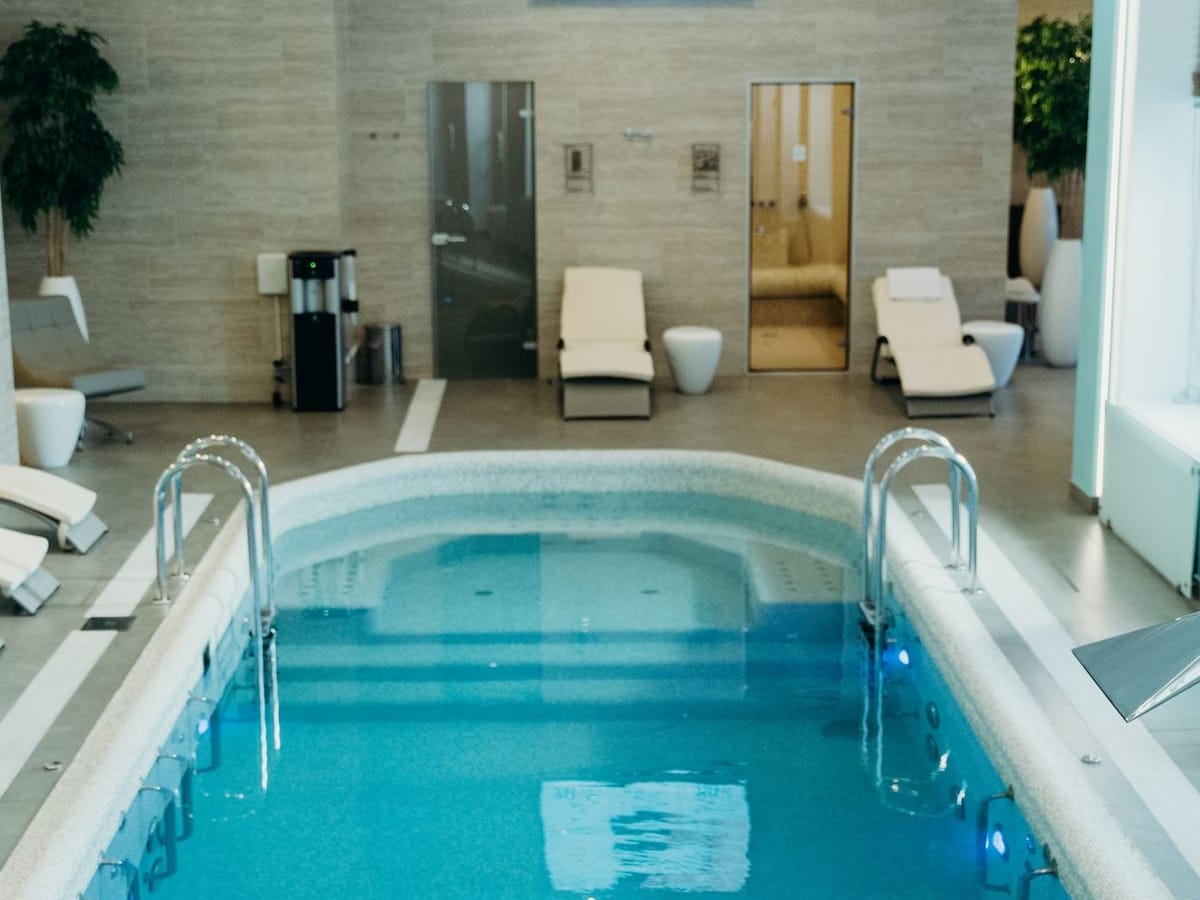
Why has this pool caused more outbreaks than any swimming pool?
What an assessor sees
It is warm, usually 30 to 40 °C, well inside the 20 to 45 °C where legionella grows. Its jets and bubbles throw a fine spray at face height. Its water is shared by many people and goes round through pipes, filters and a balance tank where biofilm forms. A swimming pool is cool and still by comparison. HSG282 exists because of it.
The hotel's water
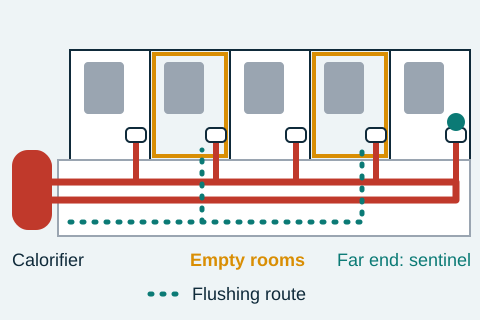
A hotel is the biggest ordinary system on this course: calorifiers, long loops floor by floor, a mixing valve in every bathroom, and rooms that stand empty out of season. The far end of each loop is the sentinel that matters, and the empty-room list is the control that slips first.
Housekeeping flushes every outlet in a room empty for a week and signs for it. A wing closed for the season is flushed, temperature-checked and its tank looked at before the first guest. Guests include the elderly and the unwell, and spa pools in hotels and holiday homes have caused outbreaks.
The spa pool's numbers
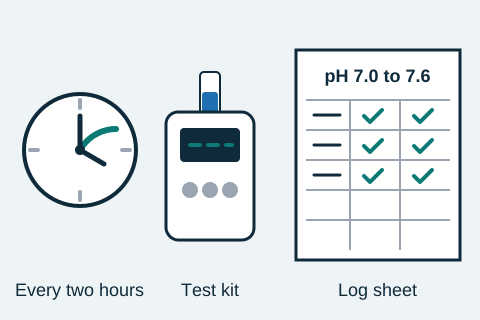
A spa pool holds 3 to 5 mg/l of free chlorine or 4 to 6 mg/l of bromine, at a pH of 7.0 to 7.6. Clarity, pH and disinfectant are checked at opening and every two hours after, and written down. The dosing system is checked daily.
The pool is drained, the whole system cleaned, strainers included, and refilled daily to weekly as the risk assessment says; the balance tank at least twice a year. The water is tested monthly for bacteria and every three months for legionella.
Quick question
The spa pool, in the HSE's words
The HSE’s words · 1 of 6
Spa pools have caused outbreaks in leisure centres, hotels, holiday homes, on cruise ships and even on display in shops.
At pH 7 a spa pool holds 3 to 5 mg/l of free chlorine, or 4 to 6 mg/l of bromine.
The pH of spa-pool water is kept between 7.0 and 7.6: it is the most important factor in the water's balance.
Clarity, pH and disinfectant are checked at opening and every two hours after in a commercial spa, and at least twice a day in a domestic-type hot tub.
A commercial spa is drained, cleaned throughout and refilled daily to weekly as the risk assessment says; a domestic-type hot tub between each group of users or at least weekly, whichever comes first.
Spa-pool water is tested monthly for general bacteria, coliforms, E. coli and Pseudomonas, and every three months for legionella.
The hot tub in a holiday let
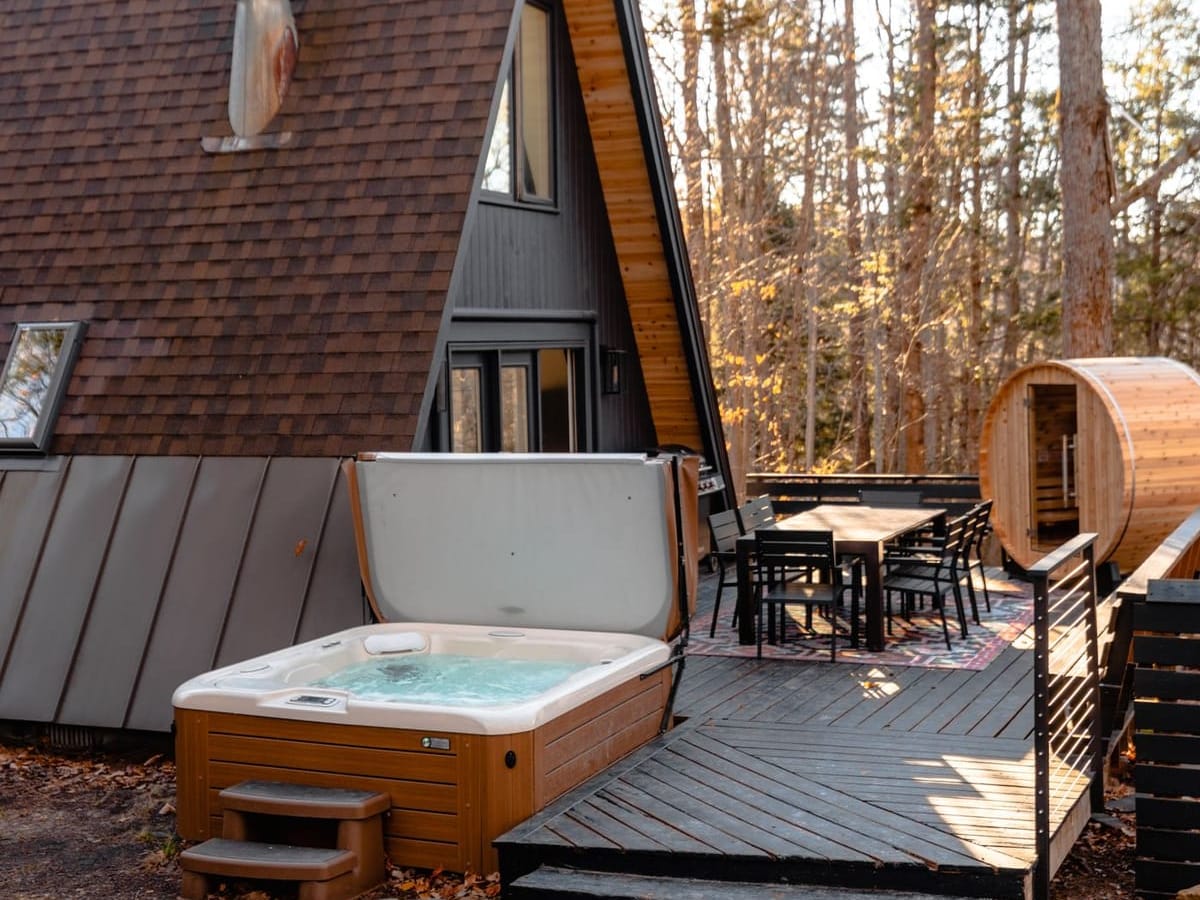
A domestic-type hot tub used in a business, in a holiday let, a lodge, a hotel bedroom with its own spa, or on display in a shop, is a spa pool in the HSE's eyes and comes under HSG282. The owner is the duty holder, however far away.
Its routine is lighter but real: clarity, pH and disinfectant checked at least twice a day; drained, cleaned and refilled between each group of guests or at least weekly, whichever comes first; filters cleaned; a log kept. Guests cannot be expected to do it.
Quick question
In your building
For something else, or i just want to understand it.
If your premises have a spa pool or hot tub, HSG282 applies: the disinfectant and pH, the two-hourly checks, the draining and cleaning, the monthly and quarterly tests. A whirlpool bath is different: filled fresh and emptied after each use, with its jets and air pipes disinfected regularly. A hydrotherapy pool has its own treated-pool routine, set out in your risk assessment. If you have none of these, this extra's lesson is the empty-room list.
This week: decide whether anything on site is a spa pool in the HSE's sense, and write the answer down.
In short
- A hotel's controls are the empty-room flush, the far end of each loop, the mixing valves, and a reopening round for a closed wing.
- A spa pool: 3 to 5 mg/l chlorine or 4 to 6 mg/l bromine, pH 7.0 to 7.6, checked at opening and every two hours, drained and cleaned daily to weekly, tested monthly and for legionella quarterly.
- A hot tub in a holiday let is a spa pool: checked twice a day, drained and cleaned between guests or weekly, logged, and the owner is the duty holder.
Before you go · question 1 of 3 · not marked
Module F done
That is this extra done; it is named on your certificate. The course page has the others.
Save and carry on later: this browser remembers where you are.
Sources
- HSG282: the control of legionella and other infectious agents in spa-pool systems (HSE, 2017)
- HSG274 Part 2: hot and cold water systems (HSE, 2014)
Words last checked 19 October 2026. Spotted a mistake? Tell us. Course version 2026.10.