Explain why the dental unit waterlines, not the taps, are a practice's main risk
State the twice-daily routine and the daily bottle routine
Know what HTM 01-05 covers and what the CQC looks for
The lines and the handpiece.
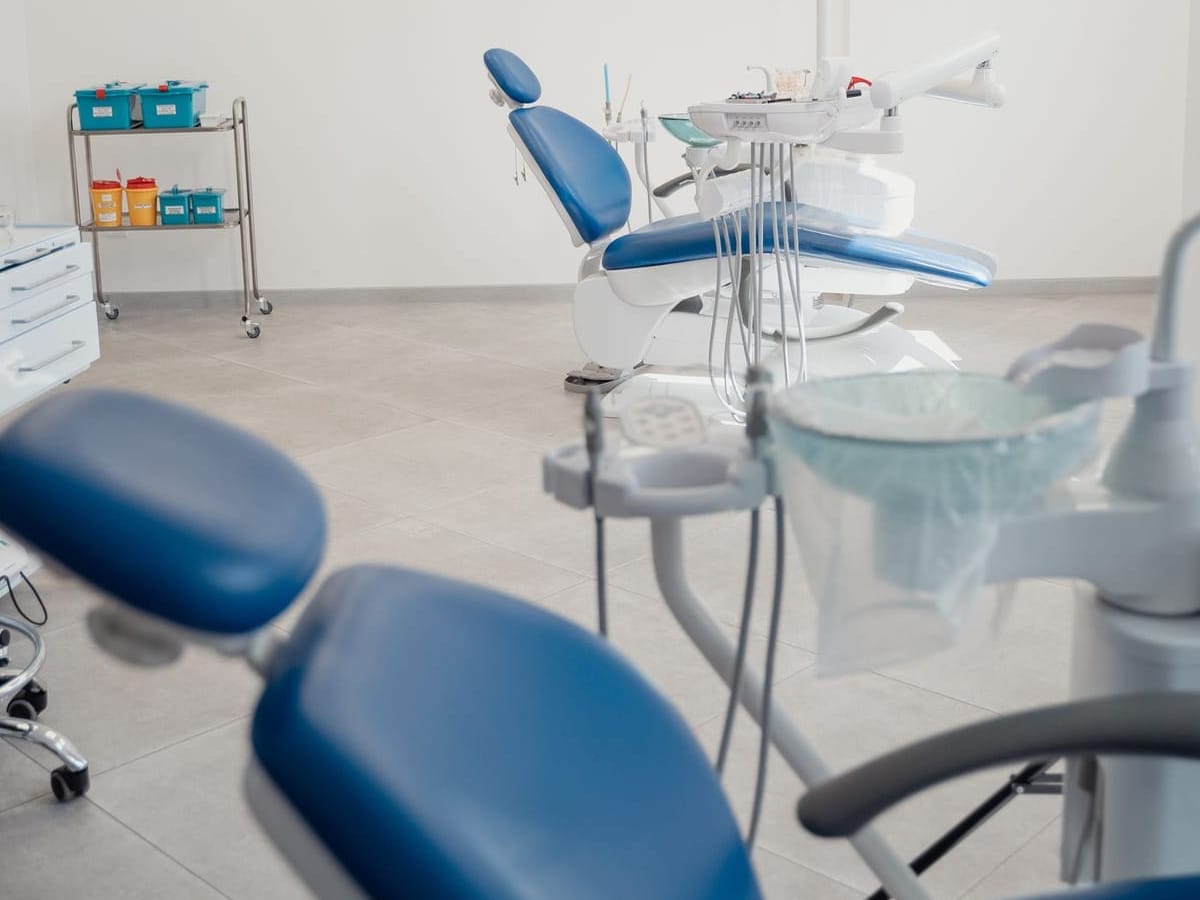
Where in this surgery does legionella get its best chance?
What an assessor sees
In the waterlines: metres of narrow tubing carrying a small volume of water at room temperature, standing overnight and over weekends, with biofilm on the walls, and ending in a handpiece that sprays a mist straight into the patient's open mouth and breathing zone. The taps are the lesser risk.
Why the lines
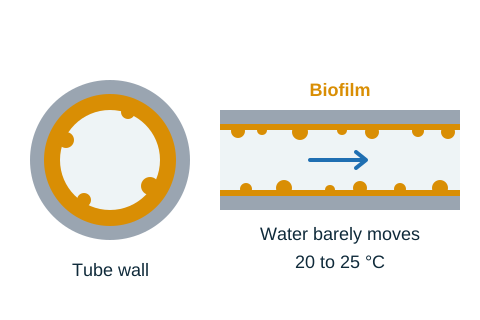
A dental unit waterline is everything legionella wants: narrow bore, slow flow, water at 20 to 25 °C, long standing times, and a surface biofilm forms on easily. The HSE names powered dental equipment as a system that can put droplets directly into a person's breathing zone.
Temperature cannot control it, because the lines cannot be run hot or kept cold. Control is by flushing, disinfection and the quality of the water the bottle is filled with. The practice's ordinary taps follow the core course; the lines follow this extra.
A lot of wall, very little water.
The routine
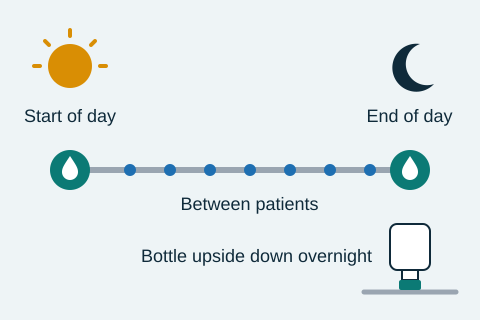
HSG274 sets it out: twice a day, at the start and end of each working day, drain down, clean, flush and disinfect the lines, pipework and bottles, with the disinfectant left for the time its maker says. Between patients, each handpiece is flushed as the unit's maker says.
Every day the bottles are cleaned, rinsed with distilled or reverse osmosis water, drained, and left upside down overnight. Microbiological checks of the line water follow HTM 01-05, the decontamination memorandum for dental practices.
Both ends of the day, every patient, every night.
Quick question
The dental routine, in the HSE's words
The HSE’s words · 1 of 2
Powered dental equipment makes droplets and can put them straight into the patient's breathing zone.
Dental unit waterlines and bottles are drained, cleaned, flushed and disinfected twice a day, at the start and end of each working day; bottles are rinsed with distilled or RO water daily and left upside down overnight; microbiological checks follow HTM 01-05.
HTM 01-05, the CQC, and the rest of the building
HTM 01-05 covers decontamination in primary care dental practices, the waterlines included: the water quality to aim for, the testing, and the records. The CQC expects to see the line routine logged, the test results, and a legionella risk assessment for the premises. That is England; Wales, Scotland and Northern Ireland have their own regulator and their own version of the memorandum, asking for the same.
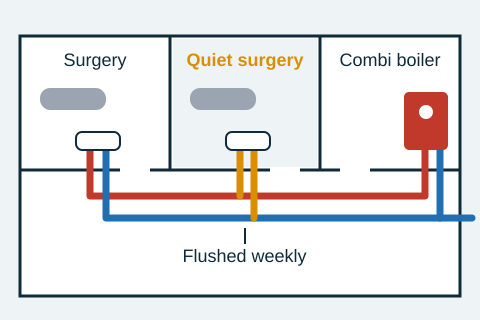
The premises are usually small and mains-fed, with a combination boiler or heaters, which is low risk. What still needs doing: the little-used surgery flushed weekly, any shower or staff kitchen on the list, and a flush of every outlet and line before the first patient after a closure.
The quiet surgery is the one to watch.
Quick question
In your building
For something else, or i just want to understand it.
If your premises have any equipment that holds a small volume of water and sprays it near a face, dental or otherwise, it is run to its maker's flushing and disinfection routine and logged, and named in the risk assessment.
This week: list any kit that sprays a small volume of water near people, and find its routine.
In short
The dental unit waterlines are the practice's main legionella risk: narrow, warm, standing, with biofilm, sprayed into the patient's breathing zone.
Twice a day the lines are drained, cleaned, flushed and disinfected; every day the bottles are rinsed with distilled or RO water and left upside down overnight; the log is signed.
HTM 01-05 sets the testing and records the CQC looks for; the premises' taps follow the core course, with the quiet surgery flushed weekly.
Before you go · question 1 of 3 · not marked
Module E done
That is this extra done; it is named on your certificate. The course page has the others.